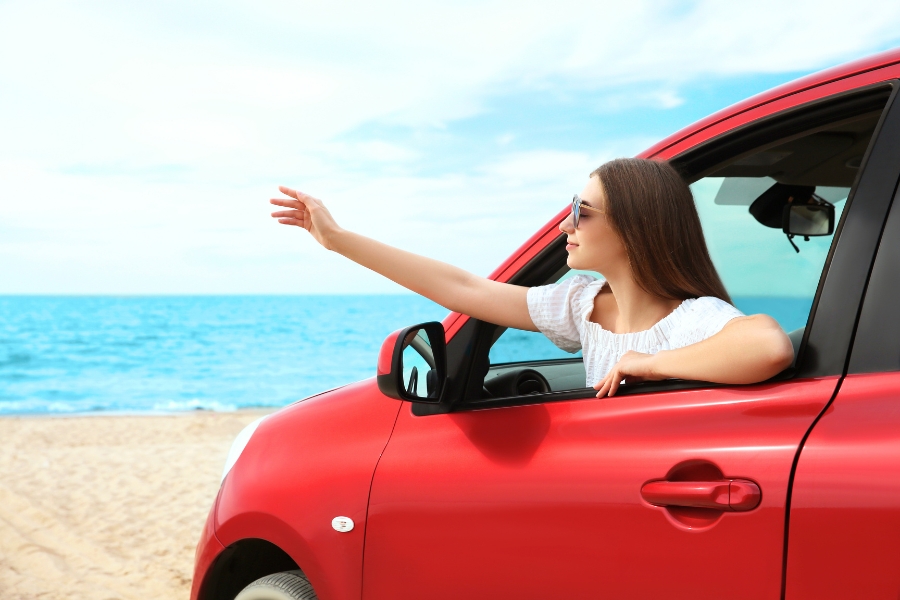
Mauritius is globally renowned for its powder-white sands and turquoise lagoons, but its true soul lies beyond the confines of a luxury resort. The island features a remarkably diverse topography of jagged volcanic peaks, subtropical forests, and a dynamic coastline that shifts from rugged cliffs to calm, palm-fringed bays.
Witnessing a tropical golden hour during a scenic coastal journey is the ultimate way to experience this landscape. As the sun dips toward the horizon, the western skies transform into a living canvas of deep ochre, fiery orange, and soft violet, casting long shadows of filao trees across the tarmac.
To truly unlock this experience, independence is vital. Relying on rigid tour bus schedules or expensive taxi transfers constrains your journey. When you choose to drive in Mauritius, you grant yourself the luxury of time and spontaneity. Renting a vehicle transitions your vacation into a bespoke adventure, placing the ultimate freedom of the island directly into your hands.

To experience the finest sunsets the island has to offer, you must traverse the roads where the blacktop mirrors the path of the setting sun. These three routes represent the pinnacle of coastal driving on the island, each offering a distinct landscape and charm.
The road from the historic sugar plains of Bel Ombre to the majestic peninsula of Le Morne is arguably one of the most visually stunning routes in the world. This journey captures the untamed essence of the southern coast, where the protective coral reef sits incredibly close to the shore, causing powerful waves to crash directly against the volcanic rock formations.
As you head west from Bel Ombre, the road twists through dense coastal vegetation before opening up to the famous Coconut Alley. This particular stretch is flanked by rows of leaning coconut palms that arch over the tarmac, filtering the late afternoon sunlight into shifting patterns of shadow and gold. It feels like an entrance to an untouched world, far removed from modern commercial development.
Continuing along this route, drivers will encounter the legendary Macondé Viewpoint. There is a small parking area at the base of the rock where you can safely leave your vehicle. Walking up the narrow stone staircase leads to a viewing platform that offers a spectacular, unobstructed 360° view of the coastline. At twilight, standing atop this rock with the wind in your hair while watching the ocean swallow the sun is a profoundly moving experience.
The final leg of this route guides you toward the shadow of Le Morne Brabant, a basalt mountain that holds deep historical significance as a UNESCO World Heritage site. Pulling up onto the public beach at Le Morne as the drive concludes allows you to watch the sky turn brilliant shades of purple and magenta.
For a drive that blends vibrant local culture with rural coastal charm, the journey from Flic-en-Flac down to Case Noyale is unmatched. This route follows the sheltered western coast, characterised by expansive sandy beaches, calm waters, and historic fishing villages that have retained their traditional character despite the passage of time.
Beginning in Flic-en-Flac, the coastal road runs parallel to a beach shaded by tall casuarina trees. In the late afternoon, this area comes alive with local families gathering for picnics, the distant rhythm of Sega music playing from car radios, and the enticing aromas of street food vendors selling fresh pineapples and hot chilli cakes. Driving through this lively atmosphere provides a beautiful insight into the island's warm communal culture.
As you progress southwards, the bustling beach vibe gives way to the more rugged and artistic atmosphere of Tamarin Bay, famous for its dark sand and its legendary surf break. Parking near the river mouth at dusk offers a magnificent view; the calm water acts as a flawless mirror, doubling the intensity of the sunset colours.
The journey reaches its peaceful conclusion in the quiet village of Case Noyale. Here, a long, rustic wooden jetty extends far out into the shallow lagoon. Walking out to the end of this pier as the sun hits the horizon line reveals a stunning view. From this vantage point, you can watch the sun sink directly behind the silhouette of Île aux Bénitiers.
The north-western route offers a compelling transition from contemporary coastal sophistication to dramatic, historic isolation. This drive allows you to observe how the island shifts from a bustling tourism hub into a landscape defined by rugged geographical features and historical maritime landmarks.
The drive begins in Grand Baie, the lively crown jewel of northern tourism, filled with yachts, boutiques, and seaside restaurants. Leaving the bay behind, the road heads to the beautiful coastal villages of Trou aux Biches and Pointe aux Piments. This northern stretch features rocky coves with sandy stretches where luxury villas stand alongside old stone churches.
As you bypass the capital city of Port Louis and continue toward the district of Albion, the terrain undergoes a noticeable transformation. The soft sand beaches disappear, replaced by dark, jagged volcanic cliffs that rise steeply above the churning ocean. The atmosphere shifts from a playful tropical paradise to a moody coastal landscape.
The ultimate destination on this route is the Albion Lighthouse, also known as Pointe aux Caves. Perched precariously on the edge of the dark cliffs, this historic lighthouse has guided ships safely away from the treacherous reefs since the early twentieth century. When the sun begins to sink, the white beams of the lighthouse begin to cut through the deepening twilight, contrasting beautifully against the fiery red and deep gold of the western sky.

Master Left-Hand Driving: Mauritius drives on the left-hand side of the road, which is a legacy of the British colonial era. This transition requires conscious focus for drivers accustomed to the right side, especially when navigating the island's numerous roundabouts.
Plan to Catch the Sunset: Twilight transitions into complete darkness much quicker near the equator, with winter sunsets occurring between 5:30 PM and 6:00 PM, and summer sunsets closer to 7:00 PM. To avoid rushing through the scenery, aim to begin your journey by 4:30 PM so you can enjoy the warm light of the late afternoon.
Navigate the Peak Hours: The western corridors experience standard rush-hour traffic between 4:00 PM and 6:00 PM as residents commute home from work. Planning your route to avoid these localised bottleneck zones during peak hours will keep your drive smooth and relaxing.
Stay Alert and Drive Slow: Many older coastal villages feature narrow roads with minimal or nonexistent sidewalks, which means pedestrians, cyclists, and children are often near the asphalt. Additionally, drivers should maintain a moderate speed to safely avoid stray dogs that often lounge on the warm roads or cross unexpectedly.
Travel Using Offline Maps: Mobile network coverage can occasionally become patchy when driving through isolated coasts or beneath heavy tree canopies. It is highly recommended to download offline maps of the island on your phone before setting off so you can navigate seamlessly without relying on an internet connection.

How do road conditions compare among coasts? The northern and western coastal roads are generally flat, wide, and well-developed to accommodate heavy tourist traffic. In contrast, the southern coastal routes are narrower, windier, and more exposed to nature, requiring slower speeds and extra concentration.
Is it easy to find petrol stations on coastal roads? Petrol stations are frequent and easy to find along the busier western coast, particularly around major hubs. However, stations become much scarcer along the rugged southern coast, so it is wise to top up your tank before heading into remote areas.
Are all beaches and parking areas free to access? All beaches and shorelines in Mauritius are legally public property, meaning access to coastal sunset viewpoints is entirely free of charge. Most public beaches feature designated gravel or sand parking areas that do not require any payment or parking coupons.
What are the usual speed limits on coastal roads? The speed limit on open coastal roads is generally 80 km/h, but it drops sharply to 40 km/h or 60 km/h when passing through seaside villages and residential areas. Speed limits are strictly monitored, making it vital to watch for sudden changes in signage.
What should I do if I find yellow lines on the road? A single yellow line indicates restricted parking where you may stop briefly but cannot leave your vehicle unattended. A double yellow line on a indicates a strict "no parking and no waiting" zone where parking will result in an immediate fine or wheel-clamping.
The true magic of Mauritius reveals itself to travellers who choose to roll down their windows, breathe in the salty sea air, and explore the island on their own terms. A scenic drive along the coasts during the golden hour offers an unmatched experience, combining the warmth of the local culture with the raw, dramatic beauty of the natural landscape.
Whether you are navigating the breathtaking curves of Macondé or watching the twilight fade behind the Albion Lighthouse, these road trips create memories that linger long after your trip ends. Do not be confined to a single resort beach. Take control of your adventure and embrace the freedom of the open road by booking your rental car in Mauritius today. Your perfect island sunset is waiting just beyond the horizon.