
Plaine Magnien serves as the definitive introduction to Mauritius for almost every international visitor. As the home of Sir Seewoosagur Ramgoolam International Airport, this bustling district acts as the threshold where your holiday truly begins. While the temptation to rush toward the white sandy beaches of the north or the luxury resorts of the east is strong, the roads of Plaine Magnien require your immediate and undivided attention.
The landscape here is a fascinating hybrid of modern, high-speed infrastructure and traditional village life. Navigating this area successfully requires a blend of technical knowledge and an understanding of local customs. This guide is designed to ensure that your transition from the arrivals terminal to the open road is as smooth and safe as possible.
For many international visitors, the biggest adjustment is driving on the left-hand side of the road, a remnant of British colonial rule. This requirement can be particularly challenging immediately after landing, as the disorienting turns and intersections around the airport can lead tired drivers to instinctively veer toward the right side when making turns.
To help navigate this, experienced travellers suggest a mental trick: ensure you, the driver, are closest to the centre line. If you're near the kerb, you’re likely on the wrong side. Take your time during those first few kilometres; while Plaine Magnien is well-marked, adjusting your spatial awareness will take a moment. Constant reminders to yourself or your passengers can also help prevent mistakes during this critical time.
Roundabouts serve as the primary traffic management method in the Plaine Magnien area, especially around the airport and newer developments like Mon Désert Mon Trésor. In Mauritius, traffic flows clockwise, and drivers must yield to vehicles approaching from the right. While this might seem simple, navigating large multi-lane roundabouts near the airport can be challenging. Proper lane discipline is crucial; stay in the outer lane if you plan to take the first or second exit, and use the inner lane for exits further around the circle, signalling clearly when transitioning.
Indicator usage is essential in Mauritian driving culture, as drivers rely heavily on signals to maintain traffic flow. Signal right when approaching a roundabout if you will pass the halfway point, and switch to the left immediately after passing the exit before your intended exit. This practice fosters clear communication among drivers, enhancing safety and reducing the minor collisions that can occur in these busy areas.
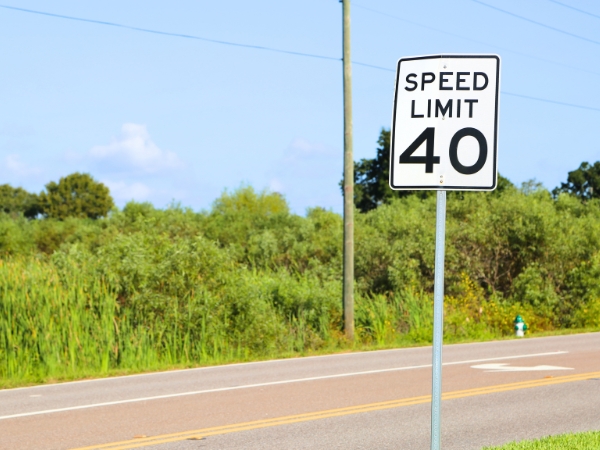
One of the most jarring aspects of driving through Plaine Magnien is the rapid fluctuation in speed limits. As you depart the airport, you will likely find yourself on the M2 motorway, where the limit is often 110 kilometres per hour. However, as you approach the residential heart of the village or the industrial zones, this limit can drop abruptly to 80, 60, or even 40 kilometres per hour within a very short distance. These transitions are not merely suggestions; they are strictly monitored by a dense network of yellow fixed speed cameras.
Local authorities are particularly vigilant in this district because of the high volume of tourist traffic and the proximity to the airport. In addition to the fixed cameras, police officers often set up checkpoints with handheld radar guns along the long, straight stretches of road that border the airport runways. Fines for speeding can be significant and may complicate your car rental agreement. It is best to maintain a conservative pace and stay well within the posted limits, even if local drivers appear to be moving faster.
Once you move off the main thoroughfares, the roads in Plaine Magnien can become remarkably narrow. Known locally as venelles, these village streets were often not designed for modern SUVs. You will frequently encounter situations where two vehicles cannot pass each other simultaneously. In these instances, a specific type of road etiquette takes over. It is customary for the driver who has a wider space or a driveway on their side to pull over and signal for the other to pass.
A quick, friendly tap of the horn is often used when approaching blind corners or narrow junctions. This is not an act of aggression but rather a helpful signal to alert oncoming drivers to your presence. If someone pulls over to let you through, it is polite to offer a brief wave of thanks. Mastering these small social cues will make your journey through the heart of the village much more pleasant and will earn you the respect of the local drivers.
While mobile data is generally good in Mauritius, there are pockets around the southern coastline and near the airport where the signal can become unreliable. Relying solely on a live GPS connection can lead to frustration if the map fails to load at a crucial junction. It is a very smart move to download an offline version of the Mauritius map on your smartphone before you leave the airport. This ensures that you have constant access to navigation regardless of your data status.
However, you should also learn to navigate using local landmarks. Mauritian street names are often not displayed prominently, and locals rarely use them when giving directions. Instead, they will refer to "the big banyan tree," "the blue shop," or the distinctive silhouette of Lion Mountain. Developing an eye for these geographical markers will help you stay oriented if your GPS suggests a "shortcut" that looks more like a private dirt track through a plantation than a public road.
Driving in Plaine Magnien is a lesson in shared spaces. Unlike the urban centres of Europe or North America, many of the secondary roads in this district lack formal pavements or sidewalks. This means that pedestrians, including school children and the elderly, often walk directly on the shoulder of the road. You must be prepared to give them a wide berth, especially during the early morning and late afternoon when foot traffic is at its peak.
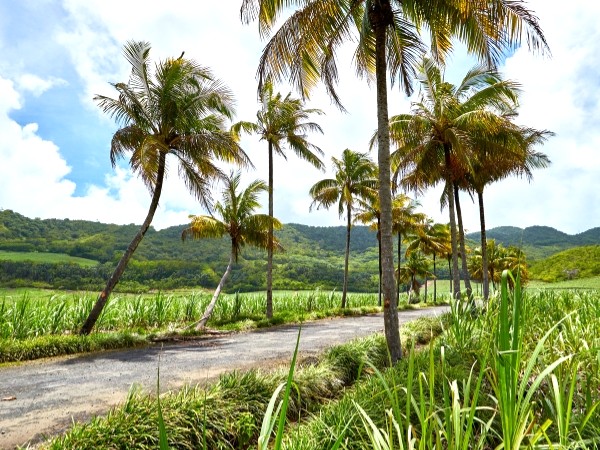
Furthermore, the local animal population presents a unique road hazard. It is a common sight to see dogs lounging directly on the warm asphalt of village streets. These animals are often remarkably non-reactive to approaching vehicles, requiring you to slow down or stop entirely to allow them to move. During the sugar cane harvest season, which typically runs from June to December, you must also be wary of heavy agricultural machinery and livestock being moved between fields. A sudden encounter with a slow-moving tractor or a stray goat is a real possibility on the backroads of Plaine Magnien.
The economy of the region surrounding Plaine Magnien is still heavily tied to the sugar industry. As mentioned, during the harvest months, the roads are filled with massive trucks piled high with cut cane, making their way to the nearby mills. These vehicles are exceptionally heavy and move at a very slow pace, especially when navigating the inclines and bends of the rural roads. It can be tempting to attempt an overtake, but this is often where accidents occur.
The roads in this part of the island are frequently lined with high stone walls or dense fields of cane that obscure your vision of oncoming traffic. It is far safer to remain patient and follow the truck until you reach a long, straight stretch of road with clear visibility in both directions. Remember that the island is small; even a few minutes stuck behind a slow-moving truck will not significantly impact your arrival time at your destination.
Plaine Magnien is a strategic location for vehicle maintenance. The petrol stations located in the immediate vicinity of the airport and the village are among the most reliable on the island. If you are planning to head toward the more rugged and remote southern coast, it is highly recommended to fill your tank here. As you move further south into areas like Savanne or the mountainous interior, petrol stations become much scarcer and may have limited operating hours.
It is important to note that most petrol stations in Mauritius are full-service. You do not need to exit your vehicle; an attendant will approach your window, ask how much fuel you require, and pump it for you. While many stations now accept major credit cards, technical glitches with card machines are not uncommon. It is always wise to carry a sufficient amount of Mauritian Rupees in cash to cover your fuel costs, ensuring you are never caught short in a remote area without a working ATM.
Parking in Plaine Magnien requires a basic understanding of local regulations to avoid fines. Around the airport, parking is strictly controlled with clear demarcations between short-term drop-off zones and long-term parking areas. In the village and the nearby town of Mahébourg, you may encounter "Blue Zones". These areas require you to display a parking disc in your windscreen, which indicates your time of arrival. These discs can often be purchased at petrol stations or local councils.
In residential parts of Plaine Magnien, the rule of thumb is to avoid parking on any street with a continuous yellow line, as this indicates a no-parking zone. Always ensure that your vehicle is not obstructing the path of the large public buses that frequent these narrow streets. If you are unsure, it is usually better to find a designated car park or ask a local shopkeeper if it is safe to leave your car in a particular spot.
The final and perhaps most important tip for any tourist is to avoid driving at night on the island. The transition to the left-hand side of the road is difficult enough in broad daylight, but at night, the lack of street lighting on rural roads near Plaine Magnien makes it significantly more hazardous. Many secondary roads do not have reflective cat's eyes or clear lane markings, making it easy to lose your bearings.
Furthermore, local driving habits can be challenging at night, as some drivers are slow to dim their high-beam headlights, which can be blinding on narrow lanes. When you combine these factors with the inevitable jet lag and fatigue that follow a long flight, the risks increase substantially. Allow yourself a couple of days to adjust to the local rhythm and road layouts during the daylight hours before you attempt a moonlit drive to a seaside restaurant.
Driving in Mauritius is an experience defined by "island time." It is a place where the journey is just as important as the destination, and where a spirit of patience will serve you better than a sense of urgency. Plaine Magnien is the gateway to this world, offering a concentrated dose of everything you will encounter across the rest of the island. By following these ten tips, you can navigate the initial challenges with confidence, ensuring that your first memories of Mauritius are filled with the sight of the majestic Lion Mountain and the sweet scent of the surrounding sugar cane fields rather than the stress of the road.
Now that you are equipped with the knowledge to drive like a local, there is no reason to stay confined to your resort. The true heart of Mauritius is waiting to be explored. Renting a car at Sir Seewoosagur Ramgoolam International Airport gives you the ultimate freedom to discover the island on your own terms. Book your car on Final Rentals today, take the wheel, and start your adventure in Plaine Magnien and beyond.